
Canadian County Crime News Sources
No single outlet owns Canadian County crime coverage. The sheriff's office runs the official side. It offers a current inmate search, a daily booking report, a 72-hour booking report, and a released-inmates page. Those are the sources of truth for custody questions. On the reporting side sit the Yukon Progress, El Reno Tribune, Mustang Times, and KOCO 5. They cover events as they happen.
None of them publishes a full Canadian County mugshot gallery or a steady daily blotter. Yukon Progress keeps a county category with sheriff, court, and crime stories. Mustang Times writes about public safety when a story warrants it. El Reno Tribune handles court and jail matters on a newspaper's schedule, and KOCO chases major events with agency-credited arrest photos. Treat each as dated coverage, not a live status check.
Record reminder: Charges can change after the news breaks, so verify outcomes with the court record.
Canadian County News Outlet Details
What you find depends on where you look. A sheriff source answers who is in custody right now or booked in a given window. A TV story may carry agency-supplied photos from an unusual incident. A weekly paper follows a filing or a trial long after the booking report has moved on. The table keeps these roles apart.
| Outlet or source | Coverage | Photos | Where to check |
|---|---|---|---|
| Canadian County Sheriff's Office | Official custody, booking, release, wanted, and agency information | Reports can show an image when supplied; roster cards may not | Current roster, date-based reports, and agency pages |
| Yukon Progress | County, court, sheriff, and crime context | Story-specific, not a verified gallery | County category and dated articles |
| El Reno Tribune | County-seat and court or jail reporting | Not a complete booking image source | Local newspaper reporting |
| Mustang Times | Mustang public-safety and breaking news | Story-specific, not a daily feed | Breaking-news category |
| KOCO 5 | Major regional and Canadian County events | Selective agency-credited examples located | Dated reporting, not a custody index |
Independent publication pages can serve as leads. The trouble is age. Some preserve outdated details, duplicate other reporting, or update on their own timelines. None of them replaces CCSO or the court, so match every name, date, and status against the agency record.
Canadian County News Photo Sources
A booking image in a news story may come from an agency, a public report, or an older event. That photo does not make the story a live jail roster. CCSO's daily booking report and 72-hour report can show a photo when one is on file. The live roster cards used a no-image placeholder. Official booking results and official photo availability are two different things in this county.
KOCO's 2016 drug-bust slideshow shows how event-driven this coverage is. It covers that one dated bust and nobody else. Later record requests fall under state law and agency policy. KOCO's Canadian County drug-bust coverage captures that selectivity in a single piece.
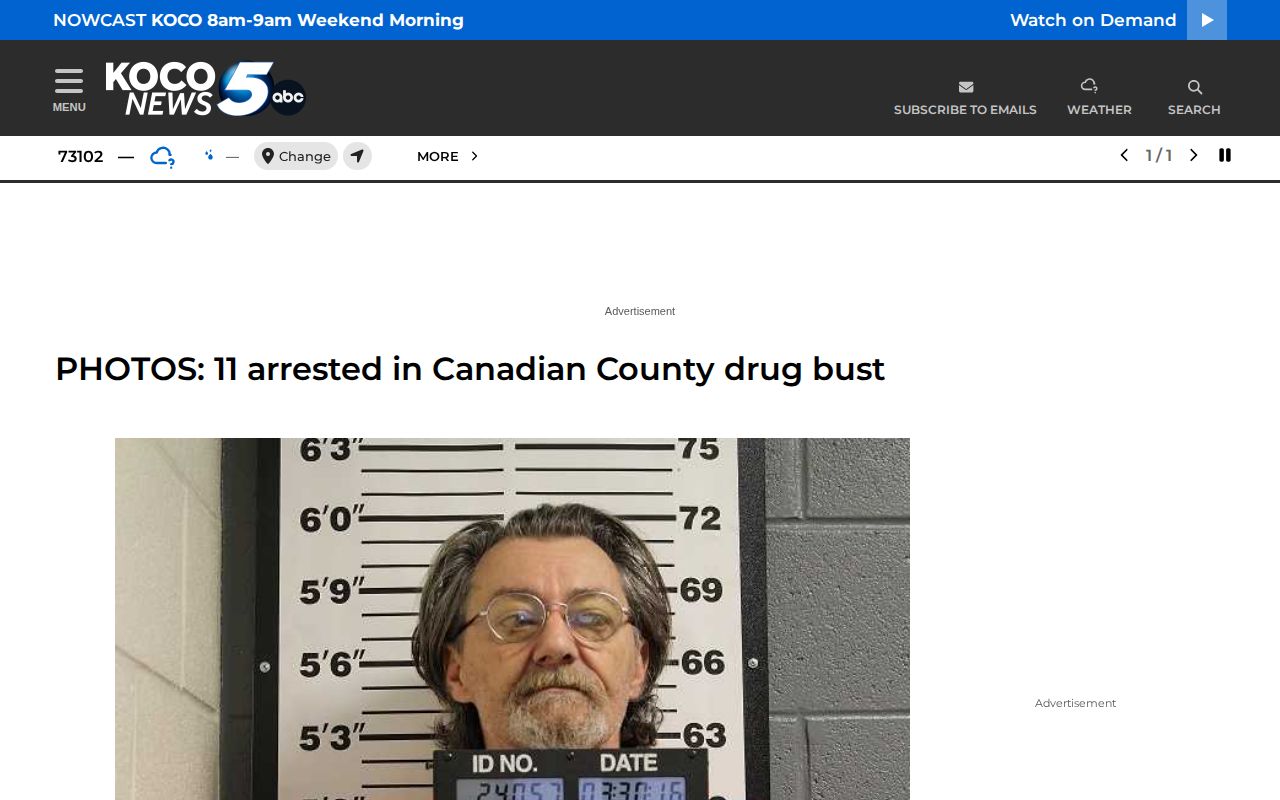
The screenshot here is a news-source sample, not a booking-photo gallery or a stand-in for the agency record.
Canadian County News to Booking Record
A headline might give you a first name, an agency, and a vague event. That is a start. Nothing more. The official record path separates what happened on the reported date from what came after. It also tells you whether someone sits in county custody now, has been released, or has a case already past the jail stage.
- Record the name, agency, and event date from the article. Do not treat the publication date as the booking time.
- Check the Canadian County booking and roster tools for current custody, the daily report, the 72-hour report, and the separate released-inmates view.
- Compare the booking date, booking number, and charges as booked. An article can use shorter or later wording.
- Search OSCN for a Canadian County case and read the filing and disposition. A court record may show a changed or dismissed charge.
- Use CCSO Records or the agency that created the report for a missing official item. The office can identify applicable access limits and fees.
The County Court Clerk anchors local case outcomes. The office sits at 301 N. Choctaw in El Reno and points readers to OSCN. One caveat: cases from before 1994 are mostly offline, so an empty search does not prove a case never existed. Municipal matters can also travel a different court path than a county district-court case.
Canadian County Booking News Timing
CCSO splits its data into current custody, daily bookings, last-72-hours bookings, and recent releases. That structure beats a vague hunt for the latest arrest news. The inmate search updates hourly. The daily report runs on a day cycle with no stated cutoff time. The 72-hour page covers the agency's stated window, not a weekly archive. The released-inmates view is its own separate check.
A news story can run long after the booking timestamp. A 72-hour entry can still matter after the person leaves the roster. Date, booking number, and court docket build a far stronger record trail than any headline.
Note: CCSO's reports are generated dynamically, so the pages promise no posting minute, permanent archive, or complete news-style log.
Canadian County City Crime Coverage
Each city takes its own approach. Yukon Police offers records and jail information but no public arrest blotter. Mustang has a Public Safety Portal with Inmates and Warrants sections. The portal's fields and image rules are not consistent. El Reno sticks to a records request route with a detailed fee schedule. None of the three posts an online mugshot roster.
So the smart path depends on where the event happened. A Yukon, Mustang, or El Reno incident can be cross-checked against CCSO if county detention applies. From there, trace it to the city records office or the court. Local details live on the city pages, including Yukon Busted Mugshots, Mustang, and El Reno, all reachable through the site navigation.
Canadian County Crime News Accuracy
Good local crime reporting quotes agencies, explains a public safety event, or tracks a court case. Even so, it has gaps. A story can miss a release, a later amendment, a transfer, or an expungement. Canadian County jail capacity and housing history can also make physical custody look different from online visibility.
So treat news as a pointer, never a substitute. Confirm booking status with the Sheriff's Office. Get the city department's own report. Then check the court for how a case ended. State and federal locators matter only once custody has actually crossed into those systems.
Canadian County Unofficial Publications
BustedNewspaper, RecentlyBooked, Arrests.org, Mugshots.zone, and Canadian County Mugs can surface names or older entries that fall outside the sheriff's short booking windows. These are publications, not government records. Their dates, images, charges, and custody labels may be stale, duplicated, incomplete, or tied to the wrong person. Counts from these sites cannot be measured against CCSO's current roster, daily report, 72-hour report, or released-inmates tool either.
Use an unofficial entry only as a lead. Take it back to CCSO, the relevant police agency, and the court. RecentlyBooked describes a 30-day window. The sheriff's report names 72 hours. BustedNewspaper's pagination can expose older material, while Arrests.org and Mugshots.zone follow their own presentation rules. Canadian County Mugs is unofficial too. None of these pages settles current custody or a case outcome; only the originating agency record can do that.